Case Study: Vacuum Drainage for Temporary Catering at the 2024 Paris Olympic Qualifier Series – Shanghai Urban Park
Case Study: Vacuum Drainage for Temporary Catering at the 2024 Paris Olympic Qualifier Series – Shanghai Urban Park
Wastewater Collection & Discharge Solutions for Temporary Catering Areas at Major Events
1. Project Background
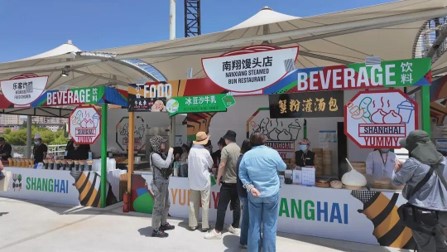
The 2024 Paris Olympic Qualifier Series Shanghai leg was held at the Huangpu Riverside Urban Park in Shanghai. The event featured urban sports including BMX freestyle, skateboarding, breakdancing, and climbing, alongside catering, retail, spectator services, and the City Sports Festival. Unlike traditional permanent venues, such large-scale events are characterized by strong temporality, concentrated crowds, rapid setup of service facilities, and swift post-event dismantling — placing high demands on the adaptability, construction efficiency, and operational stability of on-site water supply and drainage systems.
In the peripheral catering zone of the event, numerous temporary food stalls needed to establish effective drainage capacity within a short timeframe. Catering wastewater differs from ordinary domestic sewage — it contains grease, food residue, and suspended solids. Improper drainage planning can easily lead to pipe blockages, surface water accumulation, odor spread, and increased sanitation management pressure. The project site was also constrained by temporary ground conditions, road layout, visitor traffic, existing underground utilities, and construction window periods, making it impractical to use traditional gravity drainage methods that require large-scale excavation and deeply buried pipes.

To address these challenges, JUCHUAN Environmentalprovided a vacuum drainage system for the temporary catering area. Through negative-pressure collection and centralized conveyance, the system resolved issues such as dispersed catering points, constrained pipeline routing, and tight construction timelines, delivering a stable, sanitary, and flexible drainage solution for the event’s catering operations.
2. Project Requirements & Site Challenges
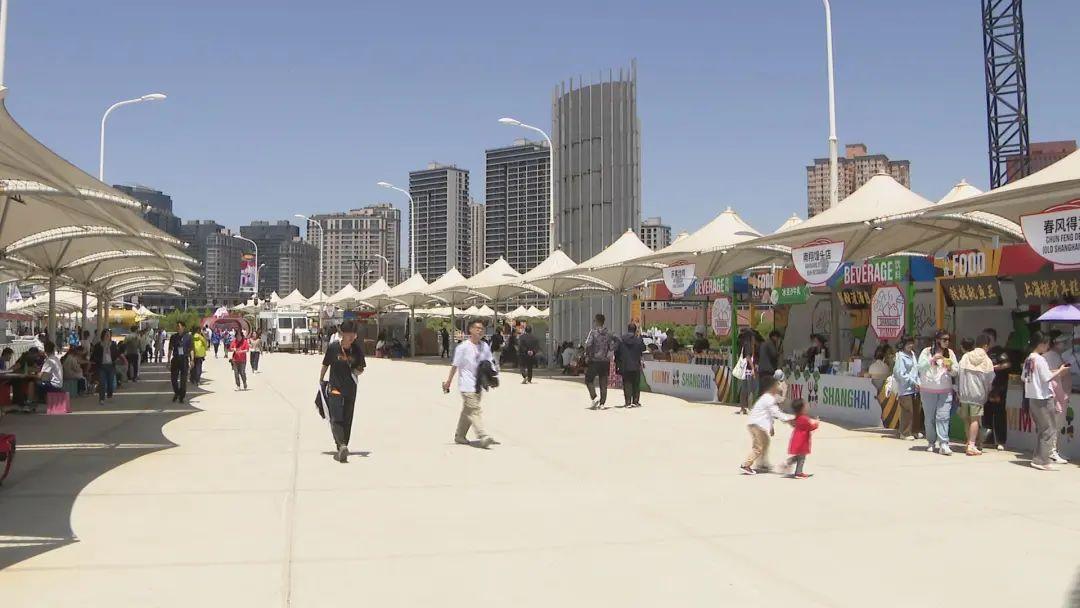
The core requirement of this project was not simply to install drainage pipes, but to achieve rapid collection, reliable conveyance, and centralized discharge of wastewater from multiple catering points with minimal site disruption in a large-scale temporary event setting. The key challenges included:
• Dispersed points: Temporary food stalls were distributed along the event service area, making drainage points relatively scattered — conventional gravity drainage would require long pipe runs and significant slope.
• Construction constraints: The event venue had a short setup timeline, with no allowance for prolonged barricading, large-scale excavation, or deep trenching. Construction had to be as lightweight as possible.
• Elevation limitations: Temporary venue areas often lack well-prepared drainage provisions. Relying on natural slope for discharge is easily constrained by ground elevation and existing utility conditions.
• High sanitation standards: During the event, catering areas needed to prevent wastewater overflow, surface ponding, and odors to ensure visitor experience and site hygiene.
• Clear dismantling requirements: Temporary facilities needed rapid removal or site restoration after the event. The drainage system needed to be readily demountable and adaptable to site conditions.
3. Solution
JUCHUAN Environmental adopted a vacuum drainage system as the wastewater collection solution for this project. The system centers on a vacuum pumping unit, using a negative-pressure pipe network and front-end collection devices to convey wastewater from each catering point to a centralized discharge location. Compared to traditional gravity drainage, vacuum drainage does not rely on continuous slope, requires relatively smaller pipe diameters, and allows flexible routing around site roads, stalls, temporary structures, and existing obstacles — making it well suited for rapid deployment in temporary venues and event areas.
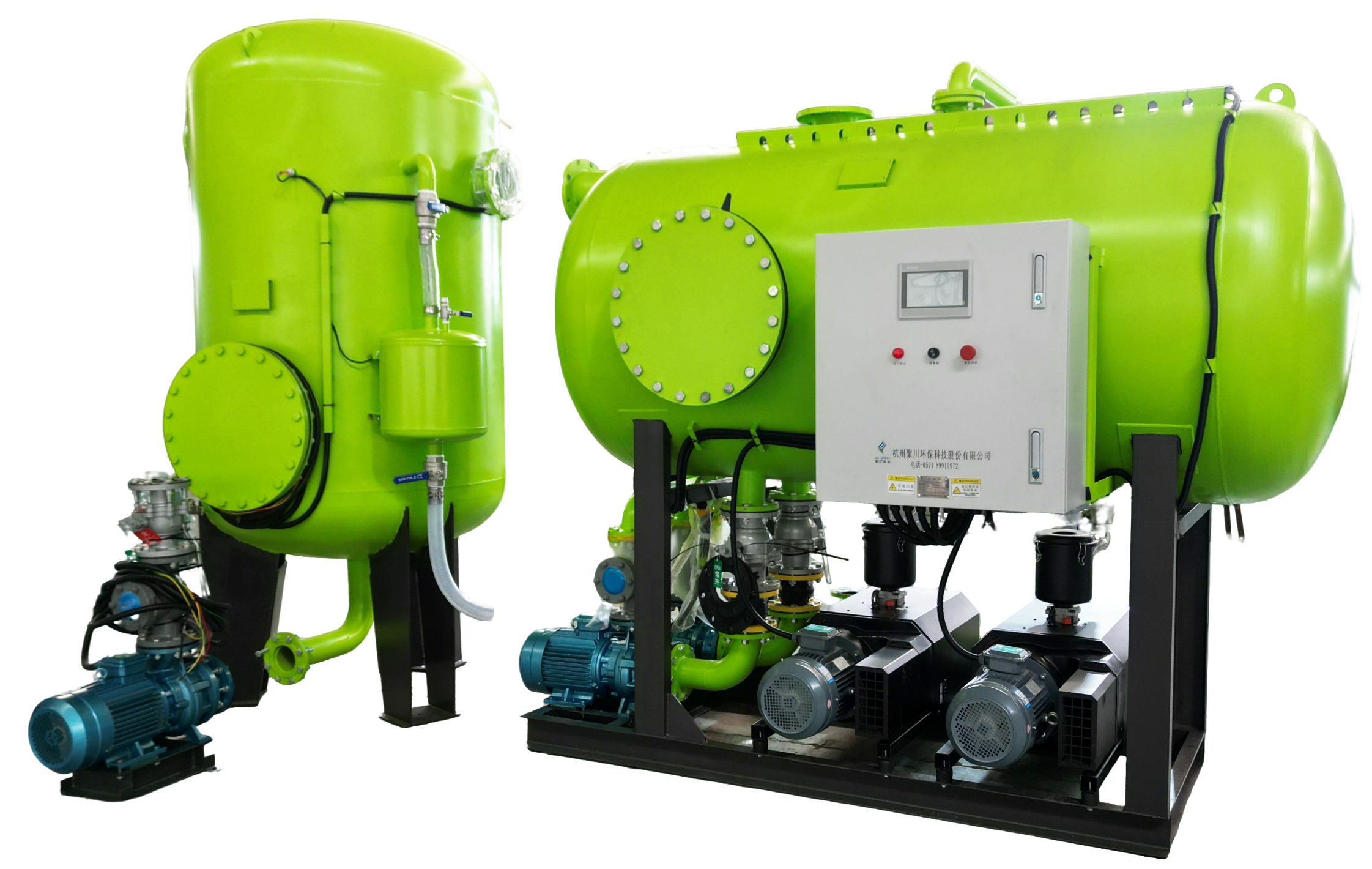
This project was equipped with one VACS3000 vacuum drainage system, including a 3000L horizontal vacuum tank, vacuum pump, discharge pump, and multiple vacuum drain lifting units. The front-end lifting units receive wastewater from catering points and, under negative pressure, feed it into the vacuum pipe network. The vacuum pumping unit maintains system vacuum, collects wastewater, and conveys it via the discharge pump to the downstream discharge system.
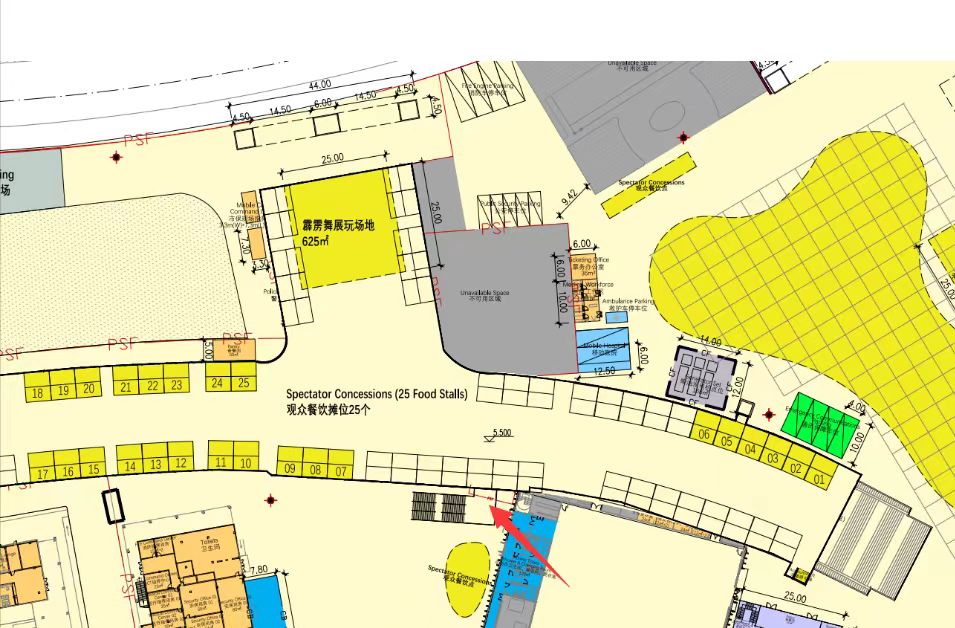
During on-site implementation, the system’s pipe routing was optimized around the catering stall layout and temporary road conditions, minimizing disruption to the venue’s original structures and paving. For short-duration event projects, this approach effectively reduces civil works, shortens installation timelines, and facilitates post-event dismantling and restoration.
4. System Features
1. Flexible pipe routing adaptable to temporary sites. The vacuum drainage system conveys wastewater through negative pressure, eliminating the need for continuous gravity slope. Pipes can bypass site obstacles, temporary structures, and pedestrian walkways, greatly simplifying network layout.
2. Reduced excavation and shallow burial for lighter construction. Temporary event areas typically have short construction windows and stringent site management requirements. Vacuum pipes can be shallow-buried, surface-laid, or routed along edges based on site conditions, reducing deep trenching and extensive damage while enabling rapid installation and commissioning.
3. Centralized catering wastewater collection for improved site hygiene. Improper catering drainage can lead to ponding, grease buildup, and odors. The vacuum drainage system collects front-end wastewater promptly and conveys it centrally, minimizing wastewater retention and spill risk on site while improving the environment of temporary catering areas.
4. Stable operation suitable for continuous event support. During major events, catering services exhibit concentrated water usage, intermittent discharge, and pronounced peak flows. The system’s coordinated operation of vacuum tank, vacuum pump, and discharge pump accommodates flow fluctuations within a certain range, ensuring stable drainage performance throughout the event.
5. Easy post-event dismantling and site restoration. After the event, temporary catering facilities must be removed. The vacuum drainage system’s pipe network and front-end equipment offer excellent dismantling adaptability, reducing permanent civil works investment and better meeting the needs of temporary event support infrastructure.
5. Project Value
This project demonstrates the value of vacuum drainage technology in large-scale event temporary support scenarios. For applications such as temporary catering, commercial pop-ups, scenic area events, market exhibitions, sports events, and urban public activities, drainage systems commonly face the shared challenges of “temporary points, dispersed layout, constrained space, and tight schedules.” Traditional gravity drainage is often limited by slope, burial depth, excavation conditions, and restoration requirements in these scenarios, whereas vacuum drainage achieves rapid adaptation through systematic equipment and flexible piping.
From a construction perspective, vacuum drainage reduces the need for deep-buried pipes and large-scale civil works, lowering on-site coordination difficulty and helping shorten project delivery timelines. From an operational perspective, the system enables centralized collection and discharge of catering wastewater, reducing overflow, odors, and ponding — elevating environmental management in temporary catering areas. From an event assurance perspective, the system can be rapidly deployed according to temporary site conditions and dismantled or reconfigured after the event, offering strong reusability and scenario-transfer value.
This project provides a replicable technical pathway for large-event temporary catering drainage: in scenarios where adequate gravity drainage conditions are absent yet rapid drainage capacity is needed, a vacuum drainage system enables “low-disturbance construction, flexible layout, centralized collection, and stable operation.”
6. Extended Application Scenarios
Beyond large-event temporary catering areas, similar solutions can be applied to temporary commercial blocks, urban markets, outdoor exhibitions, cultural tourism attractions, camping sites, temporary kitchens, commercial pop-ups, underground or semi-underground catering retrofits, and new drainage points in existing buildings. The vacuum drainage system offers a more resilient engineering solution — especially in projects where conventional drainage conditions are inadequate, large-scale excavation is infeasible, and rapid construction and restoration are required.
JUCHUAN Environmental can provide systematic configuration of vacuum pumping units, vacuum tanks, vacuum pumps, discharge pumps, front-end lifting units, and associated piping tailored to each project’s drainage point count, wastewater characteristics, discharge distance, site elevation, and construction conditions. We also conduct detailed design optimization based on site conditions, offering full support from technical proposals and equipment supply through installation and commissioning.
7. Case Summary
The Shanghai Urban Park 2024 Paris Olympic Qualifier Series temporary catering vacuum drainage project is a representative application of JUCHUAN Environmental’s vacuum drainage system in large-scale public event temporary support infrastructure. Centered on the drainage challenges of temporary catering areas, the project deployed one VACS3000 vacuum drainage system and multiple front-end collection devices, achieving flexible wastewater collection and centralized conveyance — effectively resolving issues such as difficult pipe routing, excavation constraints, short construction periods, and high sanitation requirements.
This case demonstrates that vacuum drainage is not limited to permanent buildings and municipal drainage retrofits; it is equally applicable to rapid drainage support in large events, temporary activities, and commercial scenarios. Its core advantage lies in breaking free from traditional gravity drainage’s dependence on slope and burial depth, completing wastewater collection in a more flexible, efficient, and site-adaptive manner — offering a proven approach for similar projects.