Xining Station Commercial Mezzanine Vacuum Drainage Retrofit Project Case Study
A Model Application of Commercial Catering Drainage Retrofitting in High-Altitude Cold Regions
1. Project Overview
As a key railway transportation hub on the Qinghai–Tibet Plateau, Xining Station hosts catering and other operating businesses on its commercial mezzanine level. As commercial operations continued over time, the original gravity drainage system gradually exposed recurring problems in conveying catering wastewater: pipes prone to grease buildup, clogging, and difficulty in clearing. This is especially pronounced under Xining's high-altitude cold climate, where animal fats in catering wastewater cool, congeal, and cling to pipe walls once they enter the drainage lines. Accumulating continuously over time, they eventually shrink the effective flow cross-section of the pipes or block them completely, causing significant disruption to normal commercial operations and on-site maintenance.
2. Before the Retrofit: Repeated Clogging Became an Operational Pain Point
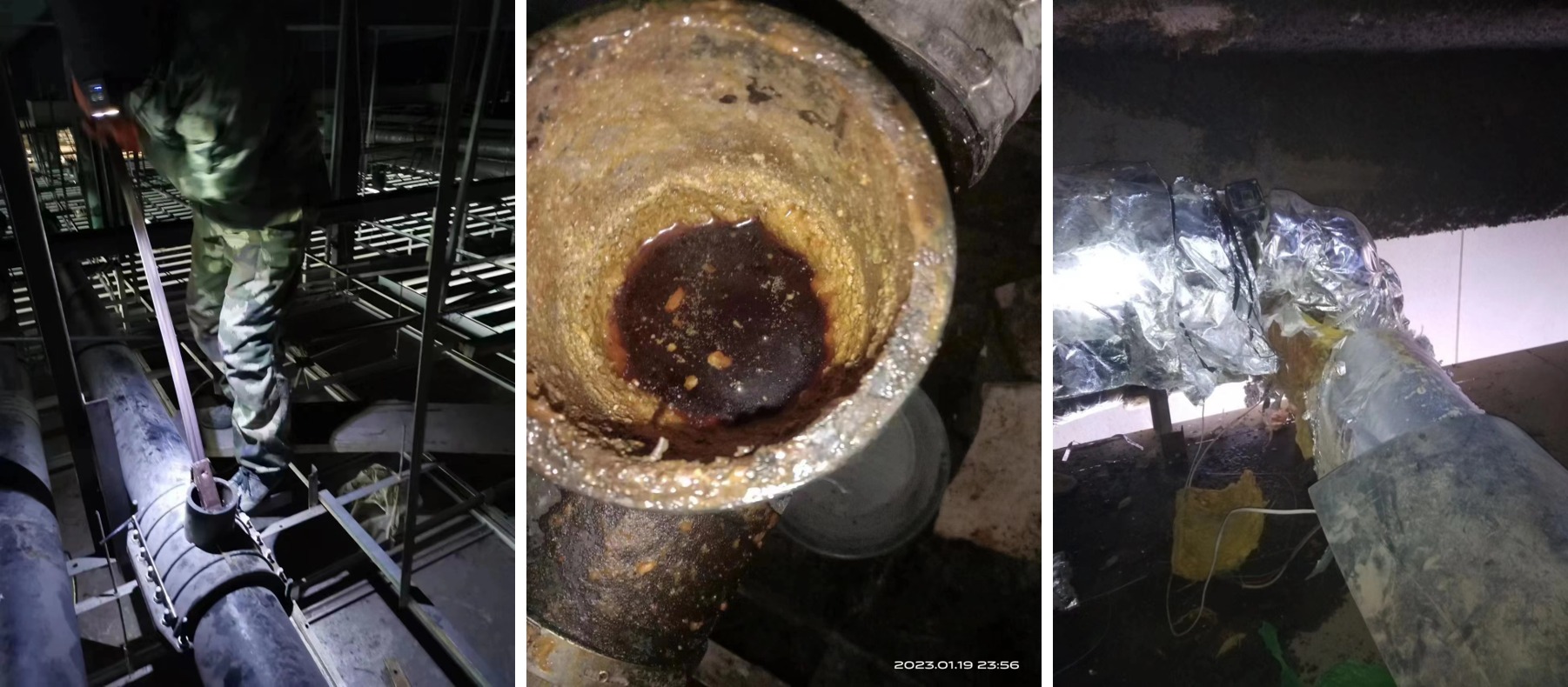
During the early consulting stage of the project, photos taken on site directly revealed how the original gravity drainage system was performing: some pipe walls had already developed a thick grease layer, and the pipe interiors were visibly taken up by grease and debris, making it difficult for conventional clearing methods to solve the problem thoroughly. Because the clogging was not caused simply by a one-off obstruction, but built up through catering grease that repeatedly cooled, adhered, and accumulated over long-term operation, even cleaning out or locally treating the pipes could not fundamentally eliminate the risk of future blockage. The original system had been retrofitted once before, yet with catering drainage compounded by the high-altitude cold environment, the clogging problem remained acute.
For a commercially operating railway station area, frequent clogging means not only higher repair and pipe-clearing costs, but also potential disruption to tenants' normal business. At the same time, the existing building offers limited interior space and complex piping; continuing with the traditional gravity drainage approach would require extensive demolition and rework that is difficult to organize and restore. The project therefore needed a new drainage method better suited to retrofitting the existing building, one that could also improve the conveyance of catering wastewater.
3. Retrofit Approach: From "Repeatedly Clearing Clogs" to "Changing the Drainage Method"
Addressing the real problems on site, the project did not keep confining itself to piecemeal repairs of the original gravity system. Instead, it reframed the solution — shifting from "clear it when blocked, fix it when broken" to "changing how the wastewater is collected and conveyed." By adopting a vacuum drainage system, commercial catering wastewater is no longer moved by the natural gravity flow of the traditional approach, but is rapidly drawn and centrally conveyed under vacuum negative pressure, optimizing the existing drainage conditions at the system level.
Vacuum drainage piping offers much more flexible routing and depends far less on continuous slope, making it well suited to retrofit environments such as the station's commercial mezzanine, where space in the existing building is limited and the structural and MEP (mechanical, electrical and plumbing) systems are complex. At the same time, the high gas–liquid mixing velocity generated during vacuum suction provides a strong scouring effect on the pipes, which helps reduce long-term grease and debris deposition on pipe walls and thereby lowers the risk of clogging in catering drainage lines.
4. Project Solution: End-Point Collection + Vacuum Conveyance + Centralized Treatment
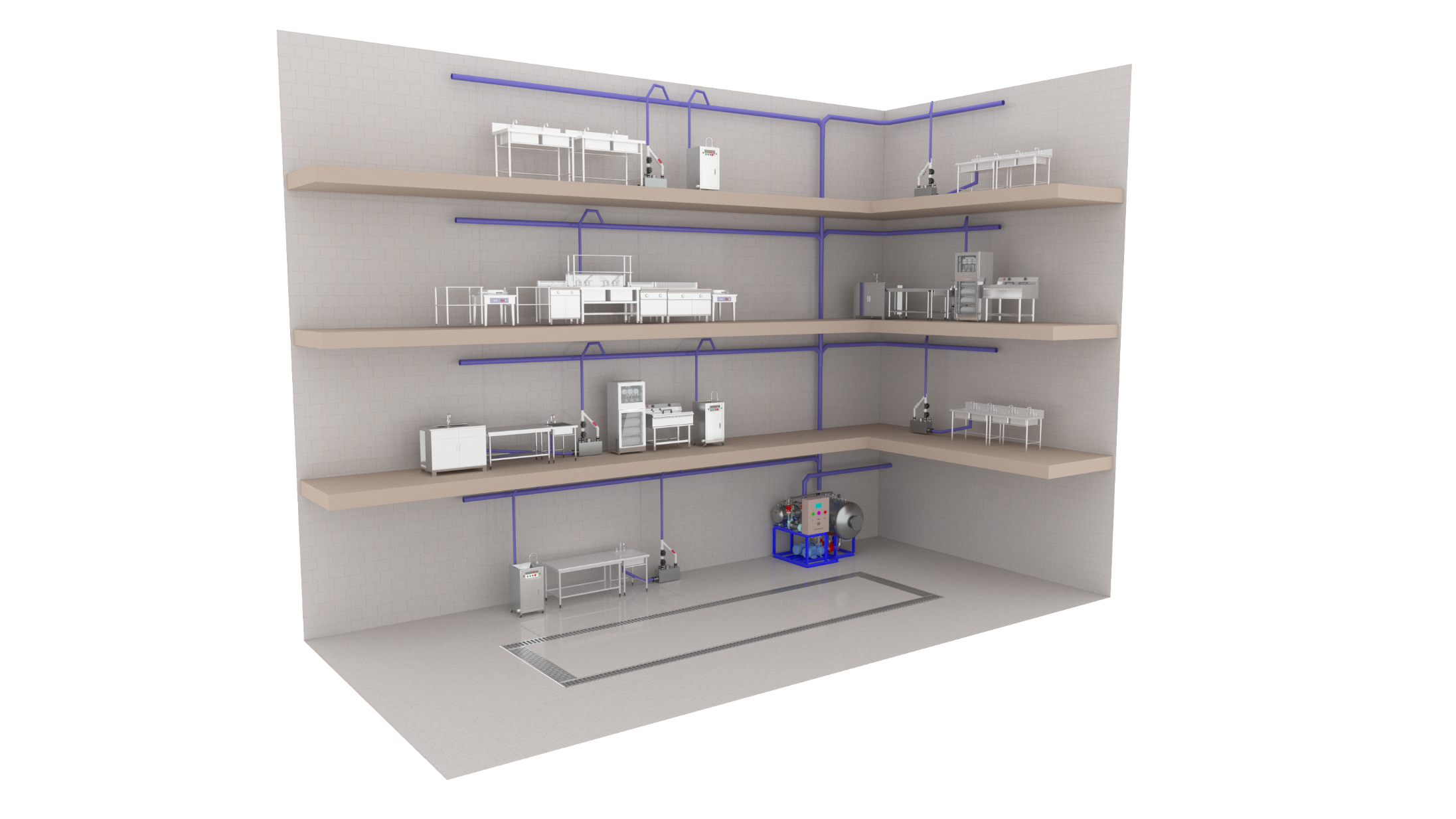
Based on the catering drainage points on the commercial mezzanine, the project carried out a systematic retrofit: vacuum catering lifting units were installed at each catering drainage end point to connect the wastewater into the vacuum pipe network, where vacuum pump sets then collect and discharge it centrally. The whole system forms a complete drainage path — "end-point collection, conveyance through the vacuum pipe network, and centralized treatment by the vacuum pump set" — achieving centralized, efficient transport of catering wastewater while minimizing impact on the existing building structure and commercial space.
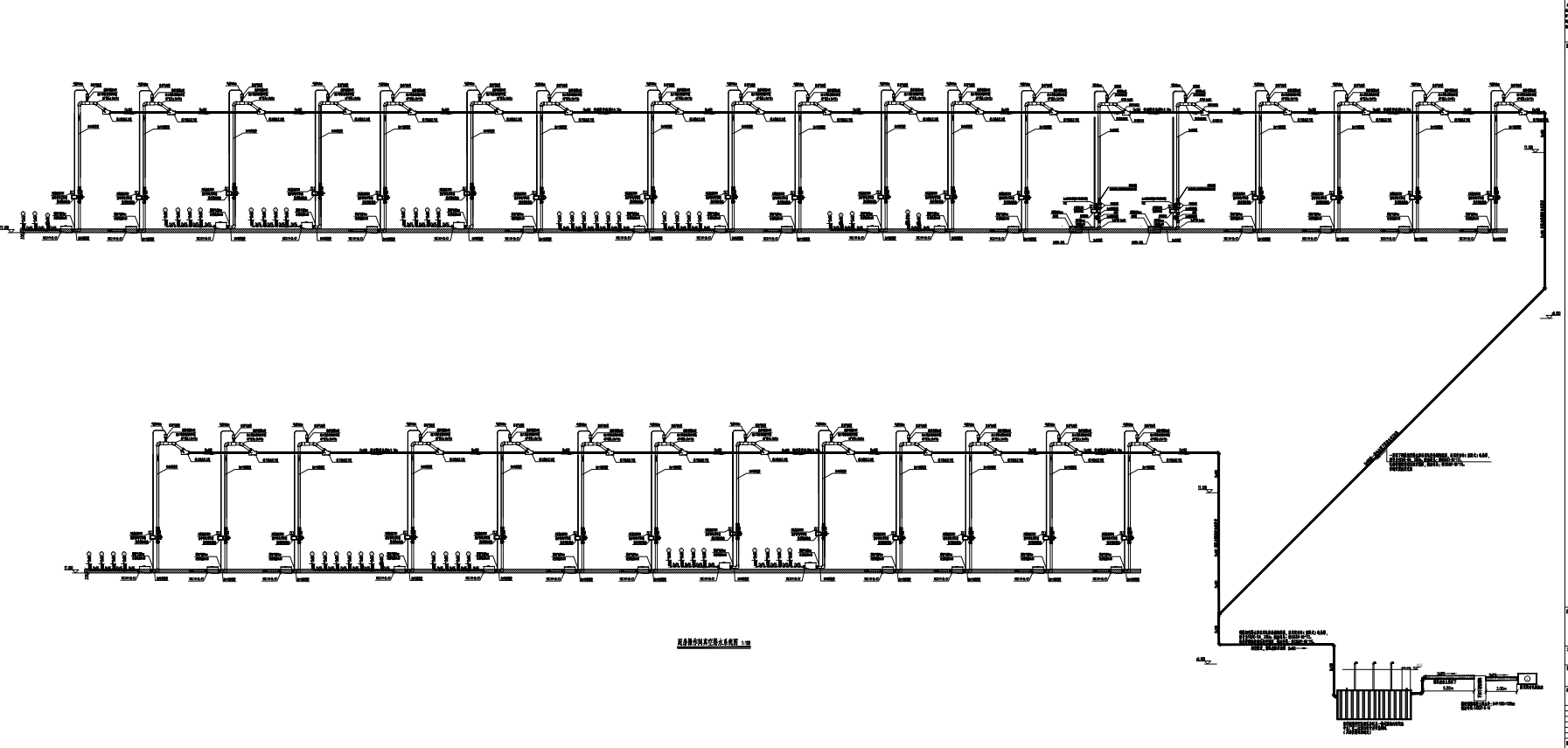
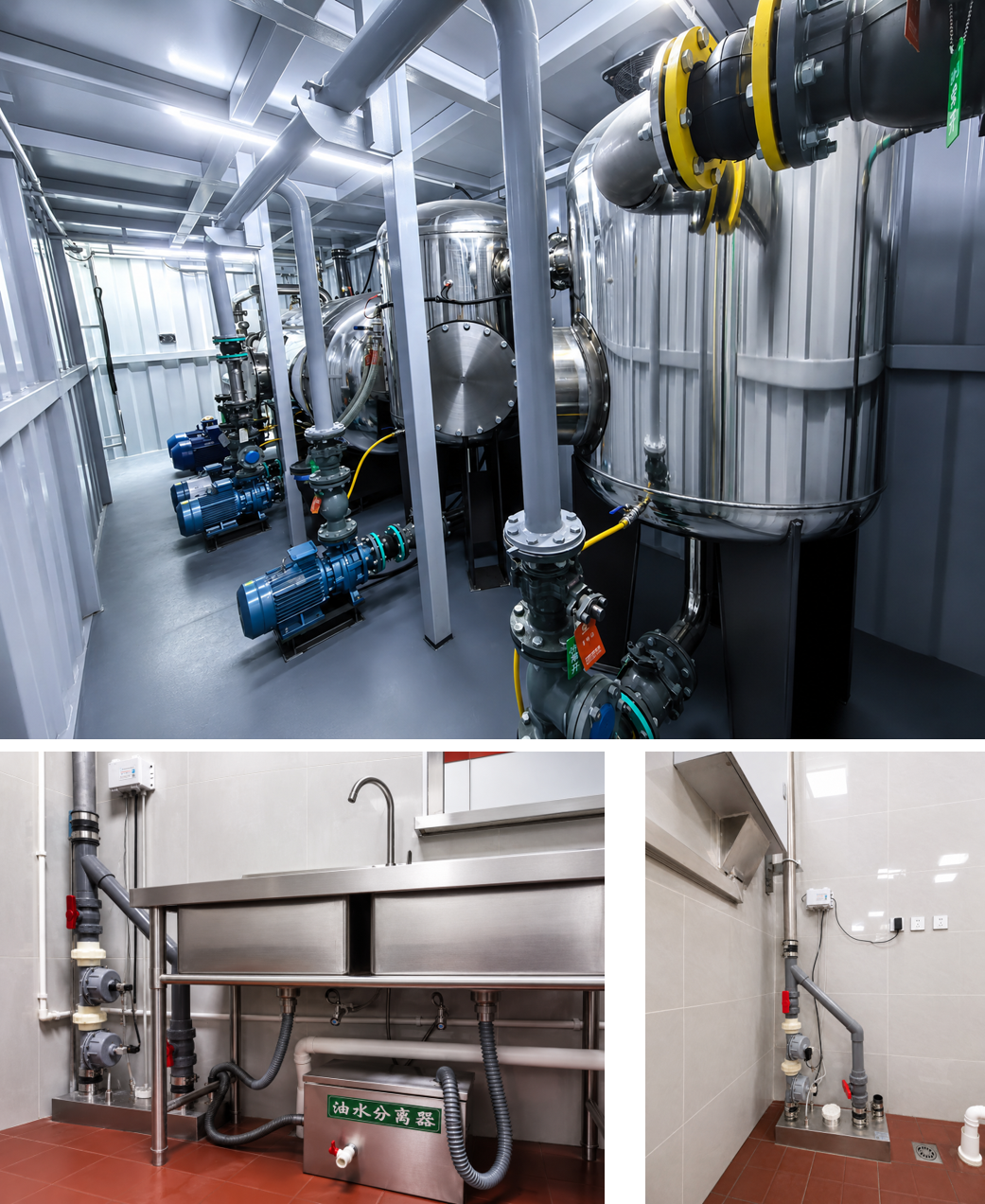
According to the equipment configuration, the project deploys one buried-type vacuum pump set together with 31 end-point vacuum lifting devices, including 29 vacuum catering lifting units and 2 vacuum float-type floor drains. Bearing in mind the characteristics of catering wastewater, the vacuum pump set is responsible for establishing the system vacuum and collecting and discharging the sewage; combined with the treatment needs of grease separation and solids removal, it provides systematic assurance for the stable discharge of commercial catering wastewater.
5. Solution Value: Solving More Than Just "Clogging"
The value of this retrofit goes well beyond replacing a set of drainage equipment. It provides a more tailored, system-level solution to the long-standing catering drainage challenge on Xining Station's commercial mezzanine. For catering wastewater in high-altitude cold regions, vacuum drainage relies on rapid conveyance under negative pressure and a higher in-pipe flow velocity, which reduces the retention and settling of sewage and grease in the pipes. For the retrofit of an existing station building, the small pipe diameter and flexible layout lower the dependence on the original building conditions, reducing the need for extensive excavation, floor lowering, and structural modification. For long-term operations, systematic collection and centralized treatment also help relieve the maintenance burden of repeated clearing and piecemeal rework.
In terms of application scenarios, vacuum drainage is especially suitable for areas where conventional gravity drainage is difficult to implement or suffers from prominent operational problems — for example, commercial catering in high-altitude cold regions, retrofits of existing buildings, underground commercial spaces, underground restrooms, and venues where drainage points are frequently repositioned. By applying vacuum drainage to the retrofit of the commercial mezzanine in an existing railway station building, the Xining Station project offers an engineering case with reference value for solving catering drainage problems in similar public buildings.
6. Project Highlights
Project Pain Points vs Corresponding Advantages of Vacuum Drainage:
Catering grease easily congeals and accumulates in the high-altitude cold environment — Rapid conveyance under negative pressure and high in-pipe flow velocity reduce long-term grease retention and settling
Original gravity pipes clog repeatedly and are difficult to clear — Gas–liquid mixed conveyance provides a strong scouring effect, lowering the risk of clogging
Limited space and complex piping in the existing station building — Smaller pipe diameter and flexible layout, with low reliance on the gravity slope
The traditional approach requires repeated demolition and rework, disrupting operations — Systematic retrofit reduces the later burden of repeated clearing and local reconstruction
Many catering drainage points — End-point lifting units are centrally connected into the vacuum network for unified collection and conveyance
7. Case Summary
The vacuum drainage retrofit of the commercial mezzanine at Xining Station was a targeted, system-level renovation carried out to solve the long-standing clogging of commercial catering drainage in a high-altitude cold region. Starting from the real pain points observed on site, the project replaced the original drainage method that relied purely on gravity conveyance with vacuum drainage, improving the in-pipe transport of oily catering wastewater through flexible pipe routing, negative-pressure suction, and high-speed conveyance, while also accommodating practical constraints such as the limited space for retrofitting the existing building, the difficulty of construction, and long-term operation and maintenance. The project demonstrates the value of vacuum drainage in special environments and in the drainage retrofit of existing buildings, and also provides a fresh solution for railway stations, commercial complexes, and other high-oil-content catering drainage scenarios.